 blog
Home Safety Checklist for Elderly Parents at Home
Last Updated: November 1, 2026
Quick Summary
A home safety checklist for elderly parents is a room-by-room review that helps families spot trip, slip and reach hazards before they cause harm. Walk each room together with your parent, sort what you find by urgency, and fix the most dangerous hazards first.
- Review entryways, living areas, kitchen, bathroom, hallways and stairs one room at a time.
- Fix immediate dangers such as loose rugs, missing handrails and cords across walking paths right away.
- Anchor grab bars into wall studs or rated toggle bolts, never rely on suction cups or towel bars.
- Walk the home at night with the lights your parent uses to reveal hazards invisible in daylight.
- Recheck walking areas, lighting and stairs every few months and after any fall or illness.
Table of Contents
- Why a Room-by-Room Home Safety Checklist Helps
- Walking Areas, Lighting and Stairs: Where Falls Start
- Bathroom Safety for Seniors: Grab Bars, Floors and Showers
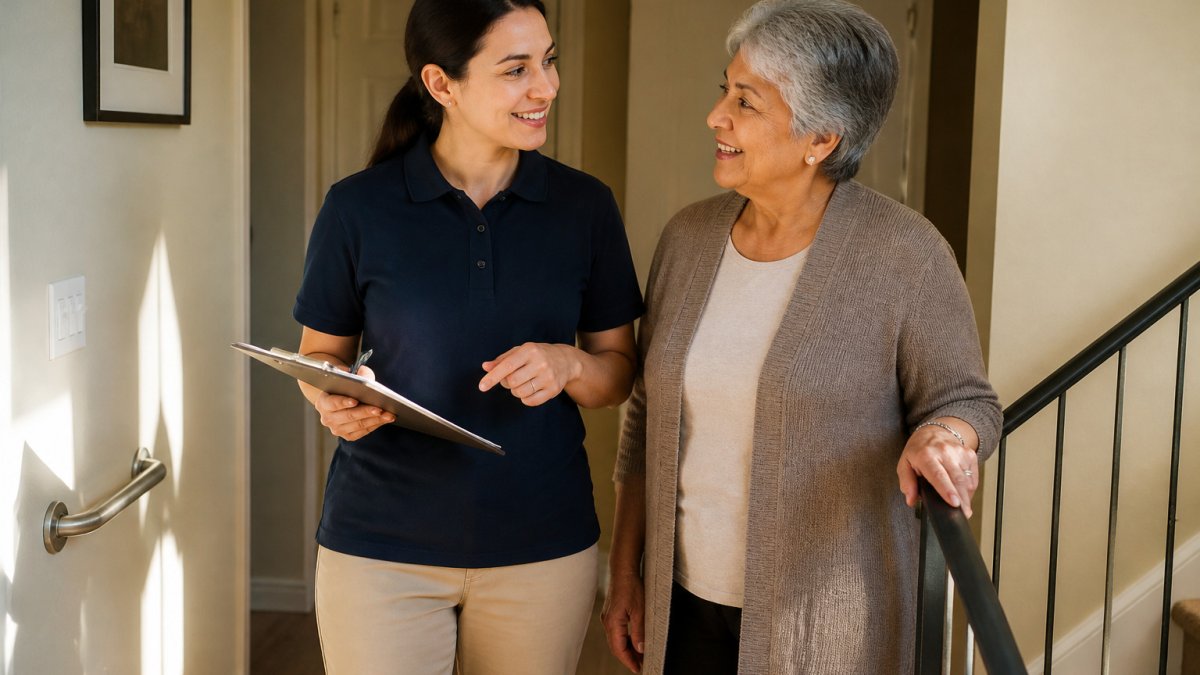
- Doing an Aging in Place Home Safety Assessment With Your Parent
- Signs an Aging Parent Needs Help and Your Next Step
- Frequently Asked Questions
Why a Room-by-Room Home Safety Checklist Helps
Many falls at home can be reduced with simple changes. A home safety checklist for elderly parents gives your family a clear, simple way to find the hazards before they cause harm. A home set up with safety and dignity in mind makes everyday care feel easier for both parents and families.
Organizations such as the National Institute on Aging publish room-by-room home safety worksheets. Check their official site for the current version. Going through each room one at a time keeps the review focused. You won't miss the hallway while you're busy in the kitchen.
Start with these rooms:
- Entryways and front steps
- Living room and bedroom
- Kitchen and dining area
- Bathroom
- Hallways and stairs
Walk through slowly. Look at the space the way your parent sees it every day. Note anything that could cause a trip, slip or reach-related accident.
Walking Areas, Lighting and Stairs: Where Falls Start
Falls rarely start with something dramatic. They start with a curled rug edge, a lamp cord across a doorway, or a stair tread that has worn smooth.
Rather than fixing everything at once, rank what you find. A simple three-tier system keeps the walkthrough from becoming overwhelming:
- Fix today (immediate danger): a loose rug at the top of stairs, a missing handrail, a cord stretched across a walking path, a burned-out bulb over a staircase.
- Fix this week (high risk): dim hallway lighting, a wobbly stair rail, clutter piled on steps, a threshold strip that catches a toe.
- Plan for later (lower risk but worth doing): adding a second handrail, motion-sensor lighting, replacing worn stair treads.
Walking surfaces. Walk the main path your parent uses every day, bedroom to bathroom, kitchen to living room, front door to car. Remove or secure loose rugs with double-sided tape or non-slip backing. Route cords along walls or behind furniture.
Lighting. Night lights in bedrooms, hallways, and bathrooms help, but placement matters more than quantity. Put light where feet land, not just where eyes look: at the top and bottom of each stair run, at bedroom and bathroom doorways, and along the path to the bathroom for nighttime trips.
Stairs. Check that handrails are solid when gripped and, where possible, run the full length of the stairs. Look for worn edges, uneven treads, loose carpet, and anything stored on the steps.
Adapt by ability. The same hazard affects people differently. If your parent has limited mobility, prioritize clear turning space and sturdy rails. If vision is changing, prioritize contrast, brighter bulbs, and reducing glare. If hearing loss makes smoke alarms harder to hear, pair the walkthrough with a plan for visible or vibrating alerts.
Cost tiers. No-cost fixes include clearing clutter, rerouting cords, moving furniture out of walkways, and replacing bulbs already on hand. Low-cost fixes include night lights, non-slip rug backing, and contrast tape. Larger renovation-level changes, such as adding handrails or replacing worn stair treads, should be planned with a qualified contractor.
Recheck walking areas, lighting, and stairs every few months, and again after any fall, illness, or change in your parent's mobility.
The three-tier system below sorts the most common home hazards by how urgently they need attention.
| Priority | Hazards | Timing |
|---|---|---|
| Fix today (immediate danger) | Loose rug at top of stairs, missing handrail, cord across walking path, burned-out bulb over stairs | Immediately |
| Fix this week (high risk) | Dim hallway lighting, wobbly stair rail, clutter on steps, toe-catching threshold | Within a week |
| Plan for later (lower risk) | Second handrail, motion-sensor lighting, worn stair treads | Planned over time |
Bathroom Safety for Seniors: Grab Bars, Floors and Showers
The bathroom combines everything that makes a fall likely: hard surfaces, water, tight spaces, and moments when your parent is standing, bending, or stepping over a tub wall. That is why it deserves more than a quick glance during your walkthrough.
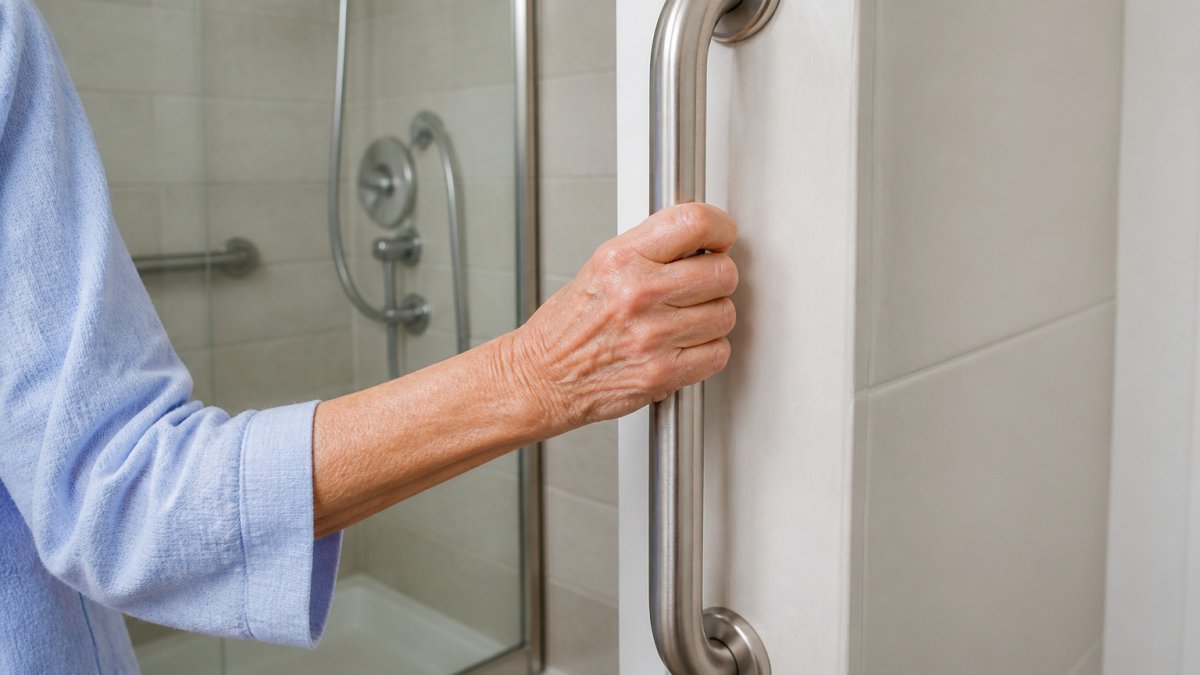
Grab bars. Install grab bars beside the toilet and inside the shower or tub, and anchor them into wall studs or use rated toggle bolts, not just drywall anchors. Towel bars and soap dishes are not substitutes; they pull loose under body weight.
Floors and tubs. Use non-slip mats or adhesive strips inside the tub and shower, and a washable non-slip mat outside. Wipe up water promptly. A stable shower chair or bench helps if standing for long periods is hard, and a handheld showerhead makes seated bathing easier.
Access and layout. Keep the path to the toilet and sink clear. Remove or relocate items that block reach, and keep frequently used items, towels, toiletries, medication, within easy reach without bending or stretching. Good lighting over the sink and in the shower area matters, and a night light on the route to the bathroom reduces nighttime risk.
Adapt by ability. If mobility is limited, prioritize a shower chair, a handheld showerhead, and bars placed for seated transfers. If vision is changing, prioritize contrast, a darker bath mat, colored grab bars, bright lighting, so edges and fixtures are easy to distinguish.
Cost tiers. No-cost steps include clearing clutter, keeping the floor dry, and rearranging items within reach. Low-cost steps include non-slip strips, a bath mat, a night light, and a handheld showerhead. Renovation-level changes include professionally installed grab bars, a walk-in shower or tub cut, a comfort-height toilet, and improved ventilation to reduce slippery condensation.
After any bathroom change, test it with your parent present, sit on the shower chair, grip the bar, and walk the route, so you catch reach or height problems before they become a hazard. Recheck the bathroom after any fall, illness, or change in strength or balance.
Doing an Aging in Place Home Safety Assessment With Your Parent
An aging in place home safety assessment works best when your parent takes part. Ask them which areas feel unsafe or which tasks have become harder. Their answers often point to hazards you might miss.
Try this approach:
- Walk through the home together, one room at a time.
- Let your parent point out spots that feel risky.
- Note each issue on your printed checklist.
- Sort the list by urgency. Fix the most dangerous hazards first.
- Plan lower-cost fixes now and bigger changes later.
Low-cost fixes include better lighting, removing clutter and adding non-slip strips. Larger changes, such as new grab bars or a walk-in shower, may take more planning. Review the checklist again every few months, since needs change over time.
Keep the checklist somewhere easy to find, and share it with other family members who visit.
Signs an Aging Parent Needs Help and Your Next Step
Sometimes the home looks fine, but daily life is getting harder. Watch for signs such as missed bills, skipped meals, unopened mail, unexplained bruises, or trouble with bathing and dressing. Changes in mood or sleep can also be a warning.
If you notice these signs, you don't have to handle everything alone. Non-medical in-home care can provide support with personal assistance, companionship, and daily living tasks for families who need help. To see what in-home care typically involves and how costs are structured, read our in-home care cost breakdown. Mutiara Elite provides compassionate, personalized, non-medical in-home support tailored for seniors and individuals with disabilities, focused on helping loved ones live safely and comfortably at home.
Your next step can be simple. You can explore our personalized home care services, read how to choose a reliable home caregiver, or contact our team to talk through your parent's needs. For a plan covering who to call in an emergency, see our emergency home care response protocol.
Frequently Asked Questions
What should be included in a home safety checklist for older adults?
A useful checklist works room by room. Check walkways for clutter and loose rugs, confirm lighting in hallways, on stairs and by the bed, look at handrails on both sides of stairs, and inspect bathrooms for grab bars and slip-resistant surfaces. Include interior door locks and any firearms storage. Note each hazard, rank it by urgency, and decide which fixes are low cost and which need larger changes.
How can I make my home safer for an elderly parent?
Start with the places where falls most often happen: floors, stairs and bathrooms. Remove trip hazards such as cords and loose rugs, add lighting that reaches the bed and the path to the bathroom, and install grab bars where a parent steadies themselves. Keep frequently used items within easy reach so your parent does not need to climb or stretch. Revisit the list every few months, since needs change over time.
How do you do a home safety assessment for an older adult?
Walk through the home together with your parent rather than doing it alone. Ask them which areas feel unsteady or hard to reach, then move through each room with the checklist. Involve them in deciding priorities, since they know their daily routines. Take notes, photos if helpful, and agree on which fixes to make first. If a concern involves health or mobility, a qualified professional can advise on next steps.
How can you prevent falls in the bathroom?
Install grab bars near the toilet and inside the shower or tub, use slip-resistant mats or adhesive safety strips, and keep the floor free of water and clutter. Make sure the room is well lit and that a bath mat sits flat. Store towels and toiletries where they can be reached without bending or climbing.
Mutiara Elite is ready to help your family plan safe, compassionate care at home. Reach out today to talk about what your parent needs.