 how-to
How to Prevent Senior Falls at Home: A Safety Guide
Table of Contents
- Assess Your Home for Fall Hazards
- Create a Senior Home Safety Checklist
- Bathroom Safety for Seniors: Essential Modifications
- Improve Lighting and Remove Clutter
- Build Strength and Balance Through Exercise
- What to Do After a Senior Falls
- Signs an Aging Parent Needs Professional Help
- Frequently Asked Questions
Last Updated: October 14, 2026
Assess Your Home for Fall Hazards
Your home should be a safe place. Yet falls are one of the leading causes of injury for older adults, which is why it's important to prevent senior falls (the CDC). The good news: most fall hazards are easy to spot and fix. (Source: the Centers for Disease Control and Prevention (CDC))
Start by walking through each room slowly. Look at the floor. Check for loose rugs, clutter, or anything that could trip you. Notice the lighting. Is it bright enough to see clearly? Pay attention to stairs, bathrooms, and hallways, these are fall danger zones.
Room-by-room walkthrough
Bedrooms: Remove items from the floor between the bed and bathroom. Keep a lamp within arm's reach.
Bathrooms: This is where most falls happen. Check for wet floors. Look at the tub and shower.
Kitchens: Keep frequently used items at waist height. Don't climb on chairs or stools. Clear spills right away.
Living areas: Move furniture so pathways are clear. Secure cords and cables so they don't cross walkways.
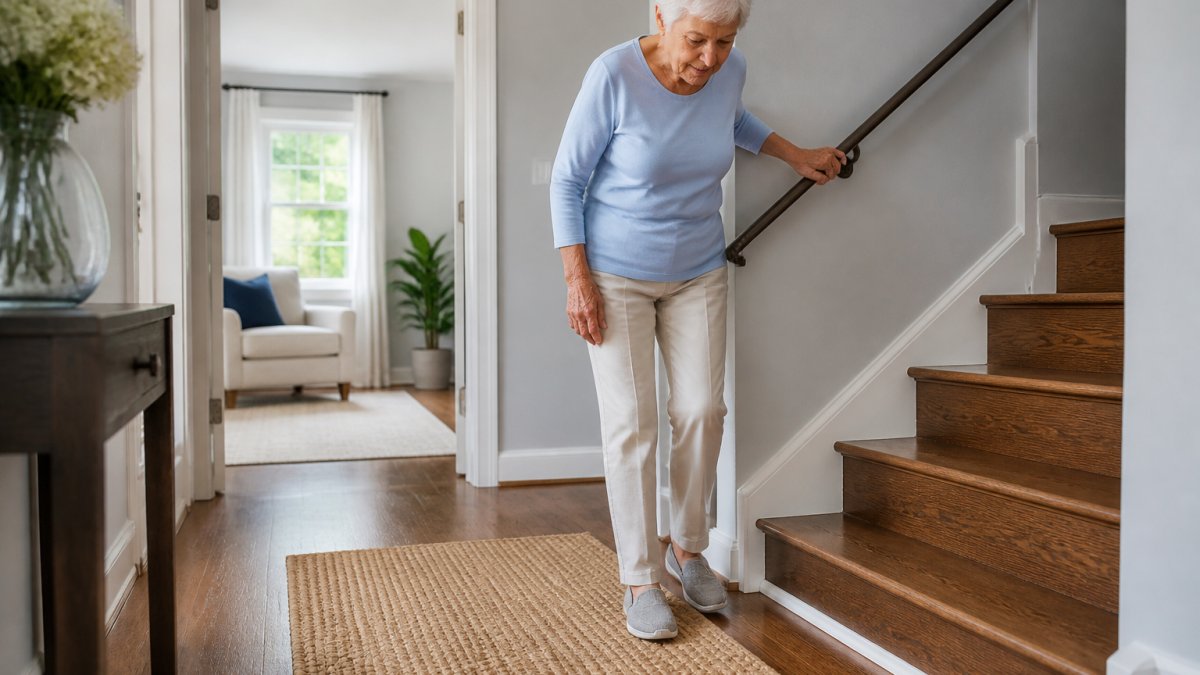
Hallways and stairs: These need good lighting and clear paths. Stair treads should be secure.
Common trip hazards to address
Clutter is the enemy. Piles of papers, books, or clothes on floors create trip hazards. Clear walkways completely. Store items in cabinets or on shelves instead.
Loose rugs cause many falls. Either remove them or use nonslip rug pads underneath. The same goes for bath mats, secure them so they don't slide.
Cords and cables should be tucked against walls. Extension cords should not cross walkways.
Pets can be trip hazards too. Train them to stay out of high-traffic areas.
Create a Senior Home Safety Checklist
A checklist helps you stay organized. It keeps you from missing important safety steps. Use it weekly to catch new hazards before they cause a fall.
Priority modifications by room
Start with the highest-risk areas first. Bathrooms and stairs should be your top priority. Then move to bedrooms and hallways.
Bathroom priorities:
- Install grab bars near the toilet and tub
- Add nonslip mats in the shower and tub
- Improve lighting around the toilet and sink
- Check that the floor stays dry
Stair priorities:
- Install handrails on both sides if possible
- Make sure stair treads are secure
- Add lighting at the top and bottom
- Keep stairs clear of clutter
Bedroom priorities:
- Clear the path from bed to bathroom
- Add a nightlight or bedside lamp
- Remove throw rugs
- Keep a phone nearby
Hallway priorities:
- Improve lighting throughout
- Clear all clutter from the floor
- Secure any loose cords
- Make sure the path is wide enough to walk safely
Quick weekly safety checks
Every week, spend 10 minutes checking your home. This catches problems early.
- Walk through each room and look for new clutter
- Test grab bars and handrails to make sure they're still secure
- Check that all lights work
- Look for spills or wet spots
- Make sure pathways are clear
- Verify that frequently used items are within easy reach
Bathroom Safety for Seniors: Essential Modifications
Bathrooms are slippery and dangerous. More falls happen here than anywhere else in the home. The good news is that bathroom safety changes are straightforward and effective.
Install grab bars and handrails
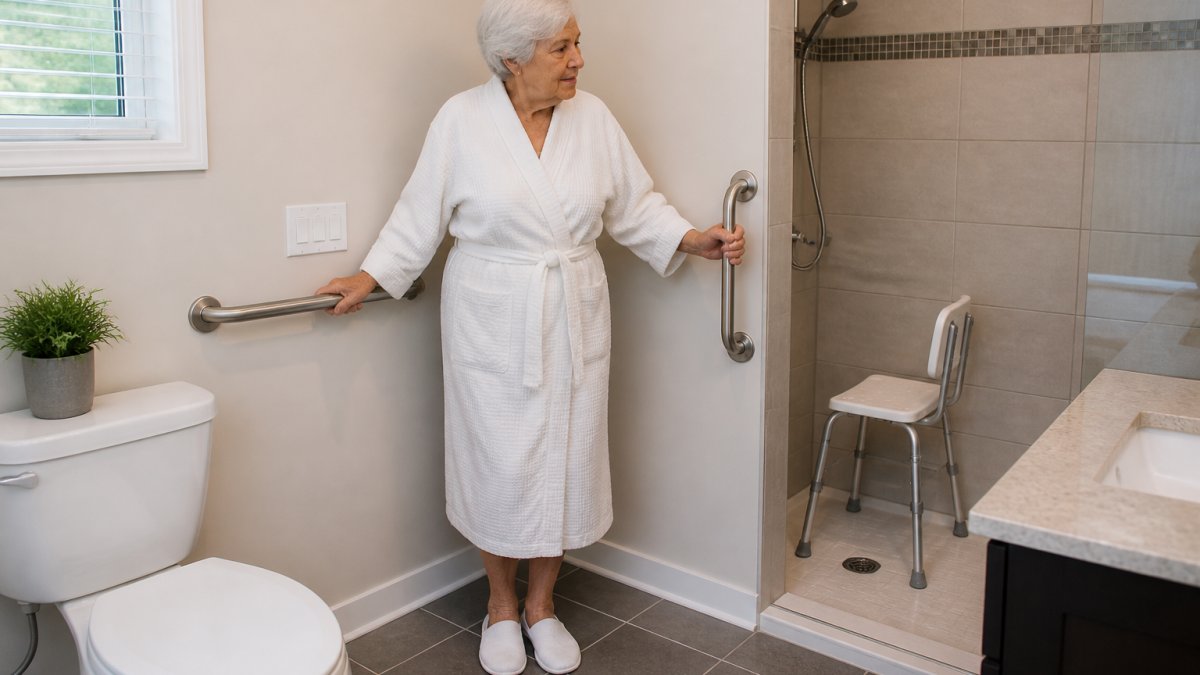
Grab bars give you something to hold onto.
Install grab bars near the toilet. Mount them 33-36 inches from the floor (Fig. 29 Grab Bars at Water Closets).
In the shower or tub, install bars at different heights. One at 24 inches helps you step in. Another at 36-48 inches helps you stand safely.
Make sure bars are mounted securely into studs or use heavy-duty anchors. Loose bars are useless and dangerous.
Add nonslip mats and flooring
Wet floors are slippery. Nonslip mats prevent falls in the tub and shower.
Place a nonslip mat on the tub or shower floor. Make sure it covers the area where you stand.
Use a nonslip bath mat outside the tub too. This catches water dripping from your body. Make sure the mat doesn't slide around.
For the rest of the bathroom, consider nonslip flooring. Tile with a textured finish works well. Vinyl flooring designed for wet areas also provides grip.
Improve bathroom lighting
Poor lighting is a major fall risk. You need to see clearly in the bathroom.
Add bright lights around the mirror and sink. These areas need good lighting so you can see what you're doing.
Install a nightlight or low-level lighting for nighttime bathroom trips.
Make sure the toilet area is well lit. You should be able to see the floor clearly when you're sitting down and standing up.
Improve Lighting and Remove Clutter
Lighting and clear pathways work together to prevent falls. Darkness hides hazards. Clutter creates obstacles.
Lighting on stairs and hallways
Stairs are dangerous in dim light. Install lights at the top and bottom of stairs.
Use bulbs bright enough to see each step clearly. Avoid harsh shadows. Shadows make it hard to see where steps are.
In hallways, lights should be spaced so there are no dark spots. Install lights near corners and turns.
Nightlights in hallways help during nighttime trips. Place them low on the wall so they guide your feet without being too bright.
Clear walkways and remove trip hazards
Every walkway should be completely clear. This means no clutter, no cords, no loose rugs.
Walk through your home and identify every trip hazard. Make a list. Then remove each one.
Organize items so they're easy to access but not in the way. Use shelves, cabinets, and storage bins.
Remove throw rugs or secure them with nonslip pads.
Secure all cords and cables. Use cable ties or tape to keep them against walls.
Build Strength and Balance Through Exercise
Strong muscles and good balance help prevent senior falls. Exercise helps you stay steady on your feet.
Balance and flexibility routines
Balance exercises train your body to stay upright. Start with simple exercises you can do at home.
Standing balance exercises:
- Stand near a wall or sturdy chair for support
- Lift one foot slightly off the ground and hold for 5-10 seconds
- Repeat on the other side
- Do this 10 times on each side
Heel-to-toe walking:
- Walk in a straight line, placing the heel of one foot right in front of the toes of the other
- Go slowly and hold onto a wall or rail
- Walk 20 steps forward, then turn and walk back
Sit-to-stand practice:
- Sit in a sturdy chair
- Stand up without using your hands
- Sit back down slowly
- Repeat 10 times
Flexibility exercises keep your joints moving well. Tight muscles limit movement and increase fall risk.
- Gentle stretching of legs, hips, and shoulders
- Reaching exercises to improve range of motion
- Slow, controlled movements, never bounce or force stretches
Start with 10-15 minutes of exercise most days. As you get stronger, increase the time and difficulty. Always move slowly and carefully.
Safe footwear and supportive shoes
What you wear on your feet matters. The right shoes provide grip and support.
Choose shoes with nonslip soles. Leather soles are slippery. Rubber soles grip better. Test shoes on wet surfaces before buying.
Make sure shoes fit well. Loose shoes can slip off. Tight shoes restrict movement.
Avoid high heels, flip-flops, and backless shoes. These don't provide enough support.
Wear supportive shoes indoors too. Don't walk around in socks or slippers. Socks are slippery on tile and wood floors.
Worn-out shoe soles lose grip. Replace shoes when the soles become smooth or slippery. This is a quick way to reduce fall risk.
What to Do After a Senior Falls
Falls happen even with prevention. Knowing what to do can prevent serious injury.
Immediate response steps
Stay calm. Take a moment to assess yourself. Can you move? Do you feel pain?
If you're on the floor and can get up safely, do so slowly. Roll onto your hands and knees.
If you cannot get up, stay where you are. Call for help. Use a phone if it's nearby. If you have a medical alert system, press the button.
Don't try to stand if you're dizzy or in pain. Wait for help to arrive.
When to seek medical attention
Some falls don't cause obvious injury but can lead to problems later. Seek medical attention after any significant fall.
See a doctor if you hit your head, even if you feel fine. Head injuries can develop slowly.
Get checked if you have pain, swelling, or bruising. You might have a fracture or internal injury.
See a doctor if you feel dizzy, confused, or unwell after a fall.
After any fall, tell your doctor what happened. They can check for injuries you might miss.
Signs an Aging Parent Needs Professional Help
Sometimes home safety changes aren't enough. Professional support can help keep your parent safe.
Red flags for increased fall risk
Watch for signs that your parent's fall risk is increasing. These include:
- Repeated falls or near-falls
- Difficulty walking or balance problems
- Confusion or memory loss
- Neglecting home maintenance or safety
- Isolation or depression
- Difficulty managing medications
- Vision or hearing problems that aren't corrected
- Weakness or fatigue
If you notice these signs, talk with your parent's doctor. A professional assessment can identify specific risks.
When to involve caregivers or professionals
Professional in-home support can make a big difference.
Our team helps with daily activities and home safety.
Professional caregivers can also spot hazards and changes you might miss. They can alert family members to new risks.
Consider professional help if:
- Your parent lives alone
- You work full-time and can't check on them regularly
- Your parent has had multiple falls
- Your parent has mobility or balance problems
- Your parent is confused or forgetful
- Your parent is struggling to manage daily activities safely
A consultation with a professional care provider can help you decide what level of support makes sense.
Preventing senior falls requires attention to your home environment, physical fitness, and knowing when to ask for help. Start with a thorough home assessment.
Frequently Asked Questions
What are the most common fall hazards in a senior's home?
The most frequent fall hazards include loose rugs and clutter on floors, poor lighting on stairs and in hallways, slippery bathroom surfaces, missing or inadequate handrails on stairs, and unsecured furniture or cords. Falls also happen when frequently used items are stored too high or too low, forcing seniors to stretch or bend awkwardly. A thorough home assessment identifies which hazards pose the greatest risk in your specific environment.
How can I help an older adult who keeps falling?
Repeated falls often signal multiple risk factors: medication side effects, vision changes, balance problems, or muscle weakness. Start by scheduling an appointment with their doctor to review medications and check vision. Implement home modifications like installing grab bars and improving lighting. Encourage balance and strength exercises tailored to their ability. If falls continue despite these steps, professional home assessment and personalized in-home support can identify underlying issues and provide daily assistance to reduce risk.
What should I do immediately after a senior falls at home?
First, stay calm and check for visible injuries. If they can stand safely without pain, help them up slowly using a sturdy chair or counter. If they cannot stand, have pain, or hit their head, call 911. After any fall, monitor for delayed symptoms like dizziness or confusion over the next 24 hours. Even falls without obvious injury warrant a doctor's visit to rule out fractures or internal injuries. Document what caused the fall to prevent it from happening again.
What are signs an aging parent needs professional in-home help?
Watch for difficulty with daily tasks like bathing, dressing, frequent falls or near-falls; confusion about medications or appointments; neglected housekeeping or personal hygiene; and social isolation. If your parent lives alone and you work full-time, or if they have mobility issues, balance problems, or recent hospitalization, professional support can provide daily assistance, monitor safety, and respond quickly to emergencies, allowing them to age safely at home with dignity.