 how-to
How to Manage Medication for Seniors: A Complete Guide
Table of Contents
- Create and Maintain a Complete Medication List
- Choose the Right Medication Organizer for Seniors
- Set Up Medication Reminders for Elderly Family Members
- Schedule a Medication Review with Your Pharmacist
- Handle Missed or Duplicate Doses Safely
- Build a Medication List Template for Caregivers
- Store Medications Safely and Check Expiration Dates
- Frequently Asked Questions
Last Updated: October 18, 2026
Create and Maintain a Complete Medication List
A medication list records every medicine a senior takes, prescriptions, over-the-counter drugs, vitamins, and supplements, and is the foundation for how to manage medication for seniors safely.
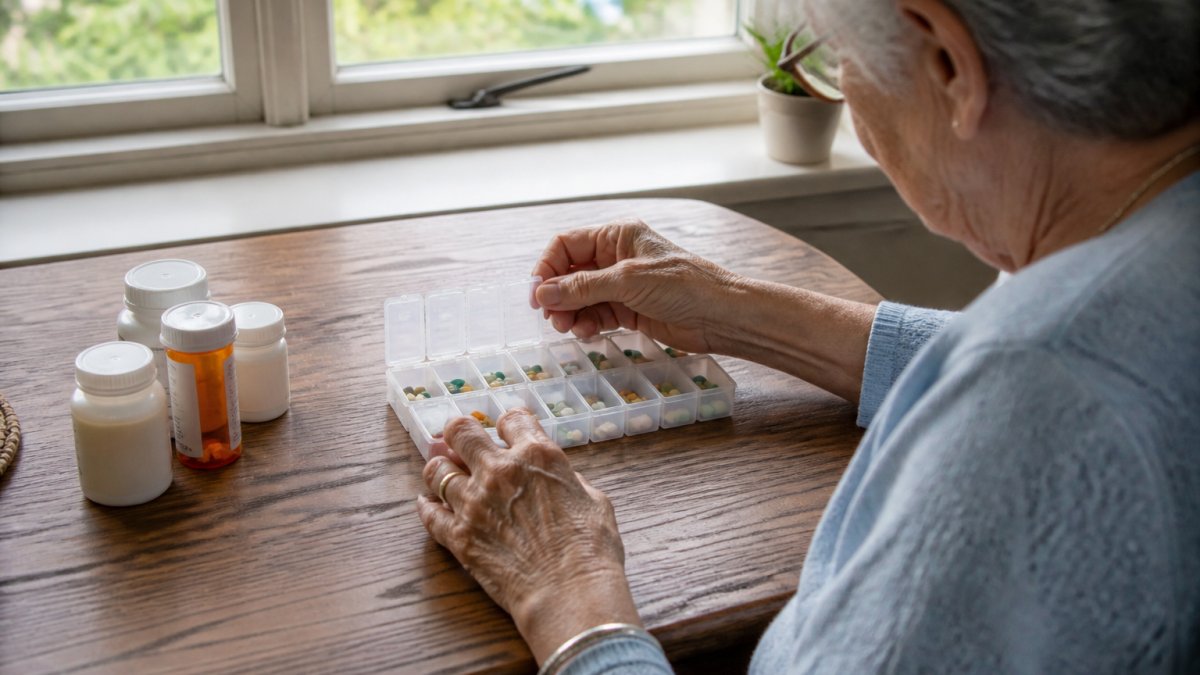
Gather every bottle and package your loved one uses, check nightstands, bathrooms, cabinets, and purses rather than relying on memory.
Update the list with every new prescription, stopped medication, or dose adjustment. Share copies with every doctor and pharmacist, give one to the senior, and keep one for yourself.
The best medication lists include:
- Full medication name (brand and generic)
- Dose and strength
- How often it's taken
Choose the Right Medication Organizer for Seniors
A pill organizer keeps daily doses visible and prevents missed doses. Weekly organizers with labeled compartments make it clear what to take and when.
For arthritis or weak hands, choose large, easy-to-open compartments over boxes that require pinching or twisting.
Automatic dispensers hold weeks of pills and dispense the correct dose at the right time.
Consider your loved one's abilities:
- Can they see small print and numbers?
- Do they have arthritis or weak grip strength?
- Do they live alone or with a caregiver?
A simple weekly pill organizer works for most seniors: a few dollars, no batteries or setup.
Set Up Medication Reminders for Elderly Family Members
Reminders prevent missed doses, seniors often forget whether they took their morning or evening pill, and a missed dose can harm conditions like blood pressure or diabetes.
Smartphone apps send notifications at dose time, track doses taken, and can alert family caregivers when a dose is missed.
Effective reminder methods:
- Kitchen timer or alarm clock
- Phone alarm with a label
- Daily checklist on the refrigerator
The best reminder is the one the senior will actually use, a timer if they dislike phones, an app if they check their phone constantly.
Schedule a Medication Review with Your Pharmacist
Schedule a review at least yearly, and more often after health changes or new prescriptions, as part of your plan to manage medication for seniors effectively.
During the review, the pharmacist will ask:
- Does the senior understand why they take each medication?
- Are they having side effects?
- Are they taking it correctly?
Many insurance plans cover medication reviews at no cost; ask the pharmacist or call the insurer. Some pharmacies offer free reviews without coverage.
A medication review often uncovers problems:
- The senior stopped taking a medicine because of side effects but never told the doctor
- Two medicines do the same thing and one can be stopped
- A dose is too high for someone with kidney problems
According to the American Pharmacists Association, medication reviews reduce hospital visits and emergency room trips.
Handle Missed or Duplicate Doses Safely
A missed or doubled dose is one of the most common medication errors among seniors, yet most guides barely cover it. The right response depends on the drug, the timing, and the senior's health conditions, a one-size-fits-all rule can be dangerous.
Start with a three-question check
Before doing anything, answer these three questions:
- Which medication was missed or duplicated? Narrow-therapeutic-index drugs behave differently from routine ones.
- How long ago was the dose due, and when is the next dose scheduled? The gap determines whether a make-up dose is safe.
- Does the senior have kidney or liver disease, recent hospital discharge, or a bleeding disorder? These change how the body clears a drug.
If you cannot answer all three confidently, call the pharmacist before acting, it's free and faster than an emergency room visit.
Medications that need a pharmacist call, not a guess
For most routine medications: take the missed dose as soon as you remember, unless the next dose is almost due, in which case skip it. Never double up. Several drug classes break that rule and require a call to the pharmacist or prescriber:
- Warfarin and other blood thinners. A missed or extra dose changes bleeding risk quickly. Do not self-correct.
- Insulin and some diabetes medicines. Timing affects blood sugar; a make-up dose can cause hypoglycemia.
- Anti-seizure medications. Missing a dose lowers the seizure threshold; doubling can cause toxicity.
For these, always call the pharmacist or the prescriber's office and describe exactly what happened. Write down what they tell you and add it to the medication list.
If a dose was taken twice
Most duplicate doses of common medicines are not emergencies, but some are. Call the pharmacist right away and be ready to state:
- The medication name, strength, and the two times it was taken
- The senior's age, weight, and known kidney or liver problems
- Any symptoms already present
If the senior is drowsy, confused, has chest pain, trouble breathing, unusual bleeding, or a severe headache, call 911 or go to the emergency room. Bring the bottles or the medication list with you.
Build a 'what if' card before it happens
Tape a simple index card inside the medicine cabinet. For each high-risk medication, write:
- What to do if a dose is missed
- What to do if a dose is doubled
- The pharmacist's phone number and the prescriber's after-hours number
- The nearest 24-hour pharmacy
Review the card with the pharmacist at the next medication review and update it whenever a prescription changes.
Track near-misses, not just errors
A near-miss is when the senior almost took the wrong pill or doubled a dose but caught it. Log near-misses with the date and what almost happened, patterns like a confusing label, two similar bottles, or a mistimed reminder emerge quickly, and fixing the pattern prevents the next real error.
Never assume a missed dose is harmless. For blood thinners, insulin, anti-seizure drugs, and heart medicines, one missed or doubled dose can cause real harm. When in doubt, call the pharmacist before acting.
Keep a written 'missed dose' note from the pharmacist on file for each high-risk medication. The next caregiver who steps in will not have to guess.
The goal is not to memorize every drug rule. It is to know which drugs require a phone call and to have the numbers ready before a mistake happens.
Build a Medication List Template for Caregivers
A medication template only works if every caregiver uses the same version and knows who may change it. The harder problem is the handoff: when one caregiver steps out and another steps in, who owns refills, appointments, and updates, and how does the senior stay involved?
The template itself
Use one shared document, digital if possible, with these columns:
- Medication name (brand and generic)
- Dose and strength
- How often and at what times
- Reason for taking it
Print a copy for the refrigerator and keep the master digital file in a shared folder every caregiver can open but only one person can edit.
Assign a medication owner
Name one person as the medication owner. That person is responsible for:
- Updating the template after every appointment or prescription change
- Ordering refills and tracking when a bottle is running low
- Scheduling the annual pharmacist review
- Being the first call when a dose is missed or doubled
Write the owner's name and phone number at the top of the template. If the owner is away, name a backup in advance and tell the pharmacy.
A repeatable handoff script
When a new caregiver takes over, walk through this script together, in person, at the medication storage location:
- Open the template and read each medication aloud.
- Match each line to the physical bottle and confirm the label.
- Show where the pill organizer is filled and when.
- Show the reminder system and how to silence or reset it.
- Point to the 'what if' card for missed and doubled doses.
- Confirm the pharmacy phone number and the after-hours prescriber number.
- Agree on how updates will be shared (text, shared document, weekly call).
Have the new caregiver initial and date the template after the walkthrough. That initial is the handoff record.
Keep the senior in control
A handoff should not remove the senior from their own care. Ask privately what they want to manage themselves and what they want help with, some want to fill their own organizer but have someone else order refills; others want reminders but to open their own bottles.
If the senior has memory loss, involve them in decisions as much as possible and document who holds the legal authority to make medical decisions, such as a health care proxy or power of attorney for health care.
Consent and privacy basics
Pharmacies and doctors generally cannot discuss a senior's medications with a caregiver unless the senior has given permission. Ask the pharmacy and each prescriber's office to add the medication owner to the senior's authorized contact list. This is usually a short form and takes a few minutes. Without it, a caregiver may be unable to get refill information or ask questions about a new prescription.
Review the template monthly
Set a recurring reminder for the first of each month. The medication owner checks that the template matches the bottles, notes any refills due, and confirms the reminder system is working. A five-minute monthly check catches most problems before they become errors.
Keep a blank template on your phone so you can fill it in during a doctor's visit. Doctors often change doses during the appointment, and updating immediately prevents forgetting later.
A template is a starting point. A named owner, a handoff script, and the senior's own preferences turn it into a system that survives caregiver changes.
Store Medications Safely and Check Expiration Dates
Safe storage keeps medications effective and prevents accidental poisoning.
Check expiration dates every three months, expired medications may not work or could be unsafe.
Keep medications out of reach of children and pets. Use a locked cabinet if needed.
Some medicines need to be refrigerated.
Medications to store carefully:
- Pain relievers
- Sleep aids
- Anxiety medicines
- Diabetes medicines
These are the ones most likely to cause harm if taken by accident.
According to the FDA's medication safety guidelines, proper storage extends the life of medicines and keeps them safe.
Managing medication for seniors requires a system, not just good intentions. At Mutiara Elite, we understand how much this matters.
Frequently Asked Questions
What is the best way to organize medication for seniors?
The best approach combines a weekly pill organizer with a written medication list and daily reminders. Use a compartmentalized organizer labeled by day and time, keep a current list of all prescription medicines, over-the-counter medicines, and vitamins and supplements, and set alarms or calendar alerts for each dose. This system helps prevent missed doses and makes it easy for caregivers or family members to monitor adherence and track medications accurately.
What should you do if a senior misses a dose?
If a senior misses a dose, check the timing of the next scheduled dose. If it is almost time for the next dose, skip the missed one and resume the regular schedule. Do not double up on doses. For time-sensitive medications like those for heart conditions or blood pressure, call the pharmacist or doctor for specific guidance. Always ask questions about what to do after a missed dose when the medication is first prescribed to ensure you have clear instructions.
When should a caregiver ask a pharmacist to review a senior's medications?
Schedule a medication review with a pharmacist at least once yearly, or whenever there is a significant health change, a new diagnosis, or when starting additional medications. A pharmacist can check for drug interactions, identify medications that may not be appropriate for older adults, and suggest adjustments to the medication schedule. This professional review is especially important when a senior transitions from a hospital or care facility to home, as medication reconciliation during these transitions prevents dangerous gaps or duplications.
How can caregivers keep track of an older adult's medications?
Use a medication list template for caregivers that includes the medication name, dose, dosage timing, reason for taking it, and the prescribing doctor's name. Keep this list updated and share it with all health care professionals involved in the senior's care. Combine this with a pill organizer, set alarms or calendar reminders, and conduct regular medication reviews with a pharmacist. Document any side effects or health changes to discuss at follow-up appointments, and maintain a visible schedule where the senior can see their daily medication routine.